
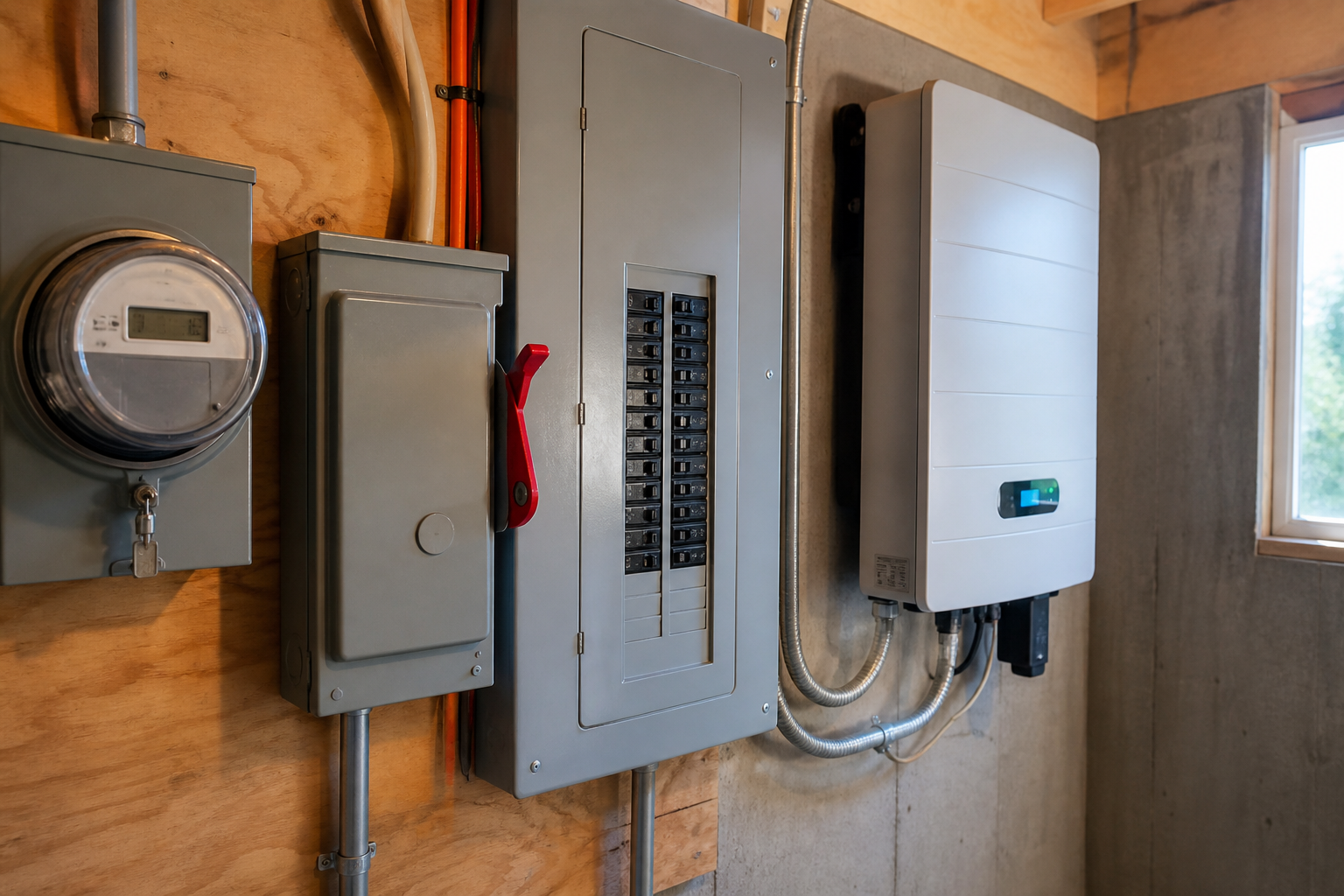
Solar grid connection is a physical fact: conductors, a meter, an inverter tied at the point of common coupling. Permission to operate is a legal and tariff fact: the utility’s written authorization to export. Crews collapse those two ideas into one phrase and then energize after the inspector leaves. That is how you get an unauthorized-operation notice.
This post separates grid connection, the interconnection application, and PTO (also searched as PPO or permit to operate) for East Coast installers.
Three different yeses
The AHJ yes is the building and electrical permit, then the inspection sticker. It says the install matches the approved plan set under the local code.
The utility’s first yes is a complete interconnection application that passes screens or studies. You may then construct (conditional approval, ISA, or countersigned Exhibit A, depending on territory).
The utility’s second yes is permission to operate. Rhode Island Energy calls it Authorization to Interconnect and says customers are not permitted to operate generation before that official notice. PECO’s brochure tells customers to wait for a signed Permission to Operate letter and new meters. National Grid Massachusetts sends an interconnect email after a clean completion package. Connecticut utilities close out in PowerClerk after inspection and meter work.
None of those documents is optional “paperwork theater.” Anti-islanding and UL 1741 listing get you into the fast tracks. They do not replace PTO.
What people mean by solar grid connection
Homeowners hear “we connected you to the grid” when the AC disconnect is landed and the inverter shows a grid voltage. Technically the inverter may already be capable of export. Tariff-wise you are not done. Net-metered services in Rhode Island Energy territory still need the old detented meter swapped for a bi-directional net meter. PECO says the same pattern: application, install after approval, then PTO and metering.
If you leave the system exporting into a meter that cannot register reverse flow, the customer’s bill gets ugly. That is not a design flex. It is a closeout miss.
PPO, PTO, permit to operate
Permission to operate is the phrase most Northeast interconnection tariffs and utility articles use. Permit to operate and PPO show up in installer search. Use whichever your customer Googled, then define it once: written utility authorization after a complete interconnection application, construction to the approved design, AHJ inspection, completion documents, and meter work.
Do not tell a homeowner they have PTO because “the portal status is Approved.” Approved to construct is not approved to operate. Read the status label.
Where the interconnection application sits
You cannot skip the solar interconnection application and jump to grid connection. National Grid MA, Rhode Island Energy, Eversource CT, UI, Con Edison, and Pennsylvania EDCs all start with an application that must be deemed complete. Incomplete files do not sit in a friendly waiting room. They sit on hold while your install date gets closer.
Moving forward after the roof is done means: upload certificate of completion, as-builts if you moved modules, inverter cut sheets if the SKU changed, and whatever Exhibit the tariff names. Then wait. Witness tests appear on some expedited/standard and larger SIR jobs. Residential Simplified jobs more often close on paperwork plus a meter swap.
Incentives are not PTO
Massachusetts SMART is an incentive program. It needs its own enrollment path. It is not National Grid’s interconnect email.
Connecticut RRES is a tariffed incentive. UI and Eversource even combine interconnection and incentive applications in PowerClerk for many jobs. Combined portal, two outcomes: incentive qualification and approval to operate. Getting one does not magically create the other if a meter or inspection is still open.
NY-Sun is NYSERDA money. The SIR still governs interconnection with Con Edison, National Grid NY, NYSEG, and the rest.
Pennsylvania SRECs and net metering ride on Chapter 75 and the EDC’s PTO.
A short field script
Before anyone closes in for production, ask:
- Is the interconnection application complete and approved for this exact nameplate?
- Did the AHJ sign the inspection?
- Is the bidirectional meter set, if required?
- Do we have the PTO / Authorization to Interconnect / Permission to Operate in writing?
If any answer is no, the array can wait. A day of lost production is cheaper than a backfeed complaint.
Athol Energy coordinates interconnection packages with permit design so the drawing the utility approved is the drawing the inspector saw. As-built drawings cover the jobs where the field moved. That is how you get from solar grid connection hardware to an actual permit to operate.
Sources: RI Energy Authorization to Interconnect, RI project completion, National Grid MA process, PECO interconnection brochure, Con Edison interconnection.