
How long does commercial solar permitting take? Longer than the residential online portal, and often shorter than the utility interconnection study sitting next to it. Installers who quote a single number (“12 weeks, permit to PTO”) are mixing two clocks.
This is how we talk about duration with East Coast commercial customers without inventing a guarantee.
Clock A: the AHJ commercial solar permit
Plan intake, completeness, review cycles, revisions, issuance, then inspections. A complete set in a mid-size Massachusetts or Connecticut city can move in a few weeks. New York City DOB and some Philadelphia or Boston reviews run longer because more bureaus touch the file (fire, zoning, landmarks, structural). Incomplete sets add a full cycle each time.
We will not publish a fake average. What we will say: the variable you control is completeness. Missing PE stamps, missing fire access, and one-lines that do not match cut sheets are the usual extra month.
Clock B: the interconnection application
Commercial nameplate usually is not Simplified.
Eversource Connecticut’s own Application to Connect table lists 15 business days for Fast Track application processing in that row, and 105 to 120 business days for Study Process on complex >2 MW jobs, plus actual study cost. That is not the building permit. That is the EDC.
New York SIR large-DG jobs add CESIR when screens fail. Con Edison publishes a $750 application fee above 50 kW. CESIR duration is in the SIR, not in this blog post as a promise.
Massachusetts Expedited vs Standard and Rhode Island Energy ISA tracks have tariff tables. Read them for the job’s process. National Grid MA also requires pre-application at 250 kW, which is a step before the interconnection application even starts.
Pennsylvania Level 2 vs Level 3 is the same story: screens vs study. Chapter 75 writes review windows into the Level sections. The EDC portal (PECO MyGeneration and others) is where your job actually sits.
Which clock finishes last?
On a 50 kW rooftop in a friendly AHJ with Fast Track or SIR small/large screens passing, the building permit and interconnection can finish near each other. On a 2 MW roof that needs a study, interconnection wins the race to the bottom. Construction may finish. Permission to operate will not, until the utility is done with meters, any witness test, and the PTO letter.
Rhode Island Energy even warns that a bi-directional meter after completion documents can take up to three weeks on Simplified. Commercial meter and relay work is not faster by default.
How to talk to the customer
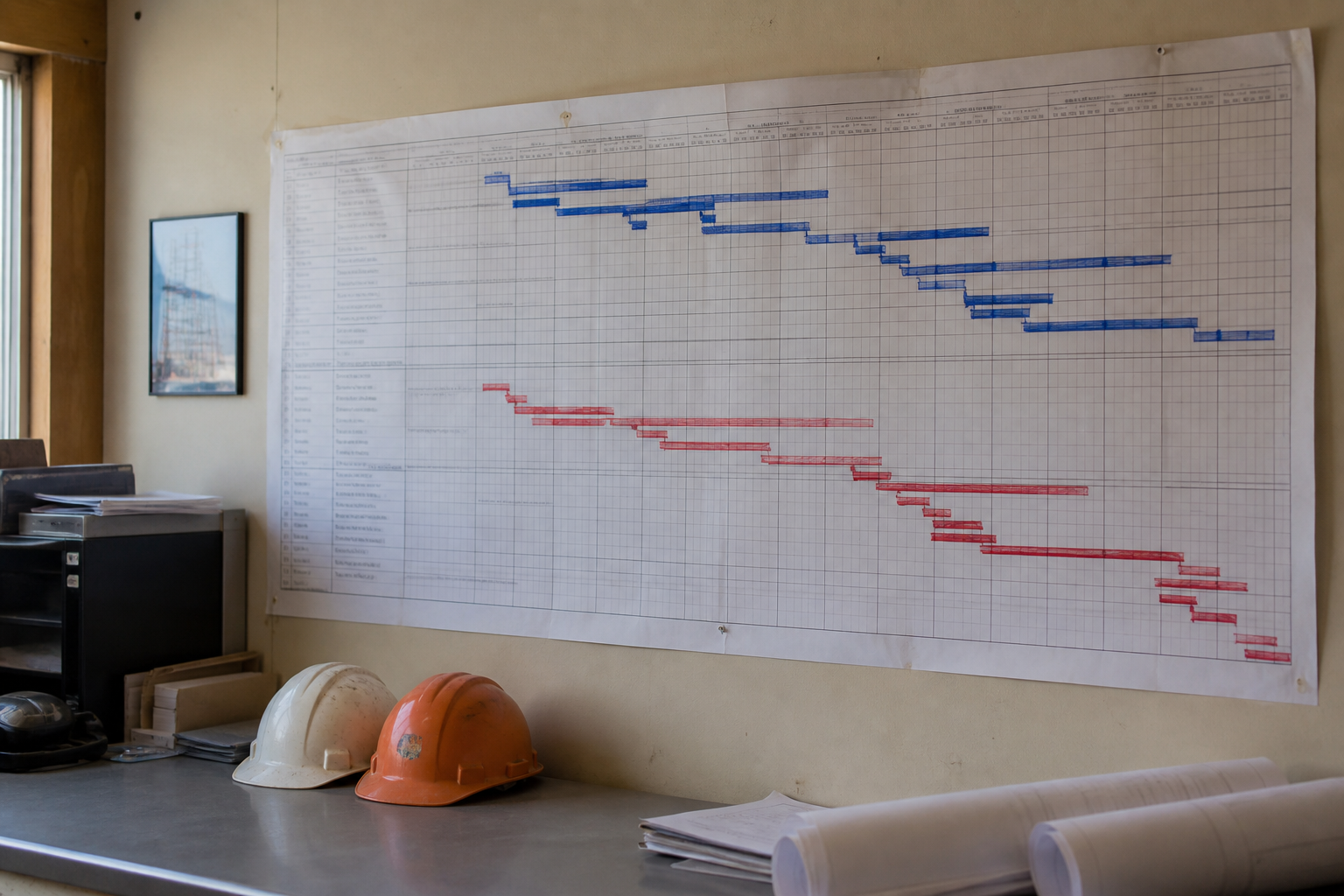
Split the Gantt chart:
- Commercial solar permit: AHJ review + inspections
- Interconnection: completeness, screens or study, ISA, construct, completion, PTO
- Incentives: SMART, RRES, NY-Sun, SRECs as their own lines
Never hide study risk in “permitting.” They are different departments.
If a developer asks for a date, give ranges and name the dependency: “issuance assumes no zoning special permit; PTO assumes the EDC does not send us to study.” Put it in the sales proposal so sales and engineering are not telling two stories.
What actually shortens commercial permitting
- One frozen equipment list
- Permit design and interconnection drawings generated from the same model
- PE stamps on the first submittal when the AHJ always wants them
- Early fire-access layout
- Not waiting to file interconnection until the building permit is in hand
- As-builts only when the field changed, filed before you ask for PTO
What does not shorten it: daily voicemails during a published 15-business-day screen.
Athol Energy’s commercial lane is Commercial and Utility plus the design services above. We will give you a calendar that names AHJ vs EDC. We will not invent a 30-day commercial PTO for a study-track feeder.
Sources: Eversource CT Application to Connect, NY SIR, 52 Pa. Code Chapter 75, RI Energy completion process.
A worked example without fake dates
Take a 400 kW rooftop in Hartford. AHJ review might be a few weeks if the commercial solar permit is complete and the PE sheets are in the first submittal. Eversource interconnection is Fast Track if you pass screens, or Study if you do not. Fast Track’s published row on the Application to Connect page is 15 business days for that process line, not including construction or meters. Study’s published row is 105 to 120 business days plus actual study cost. Your Gantt chart should show both until screens come back.
Take a 80 kW New York City roof. DOB is the long AHJ clock. SIR large-DG (above 50 kW) is the utility clock, with a $750 application fee at Con Edison and CESIR if needed. Either can finish last. PTO waits on both plus a meter.
Take a 12 kW Pennsylvania commercial outbuilding. That is already past Chapter 75 Level 1 (10 kW). Level 2 screens apply. PECO’s brochure talks about 10 to 20 days as a typical residential-scale review sketch, then more time for inspection, meters, and the Permission to Operate letter. Do not copy PECO’s brochure into a PPL job.
What to put in the contract
“Permit issuance target” and “PTO target” as two sentences, each with dependencies. If legal wants one date, they need to own the study risk. Engineering should not hide it.