
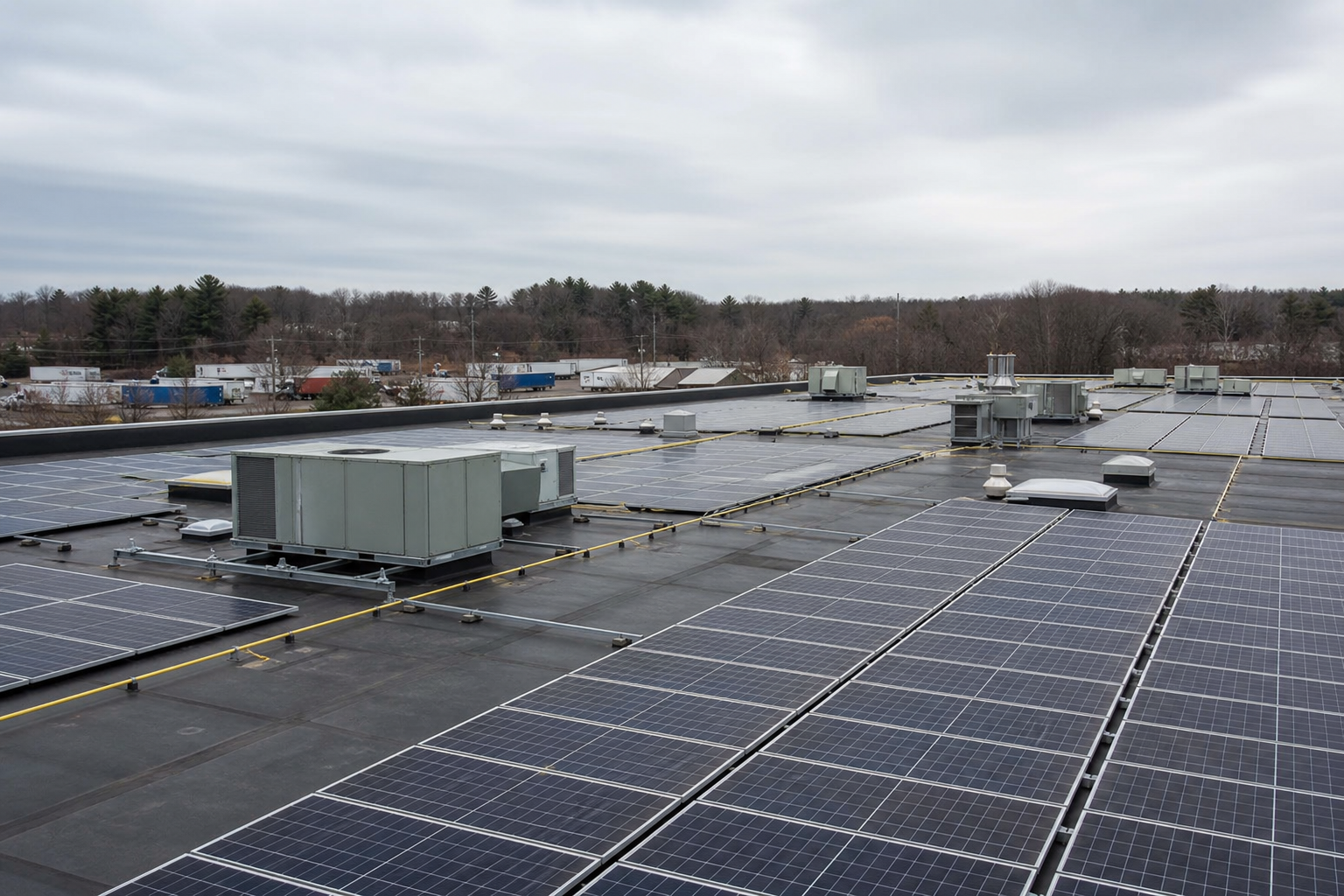
A commercial solar permit is the AHJ package for a non-residential (or large multifamily) PV job: more reviewers, more drawings, and a utility interconnection application that is rarely on the residential Simplified track. If your commercial proposal still shows “same docs as residential, just bigger,” the first plan-review letter will educate you.
Northeast commercial work (MA, RI, CT, NY, PA) still starts with a site plan and an electrical diagram. Then occupancy, fire, structure, and the EDC show up.
Drawings the AHJ actually opens
A commercial solar permit set we see succeed usually includes:
- Code and occupancy information, not just a pretty cover
- Roof plan with array, walkways, fire access, equipment pads, and existing rooftop units
- Structural PE calculations or a stamped narrative for the as-built roof, including snow drift at penthouses
- Electrical PE one-line / three-line: service, transformers, line-side or load-side tap, disconnects, relays if required, grounding, monitoring
- Labels, rapid shutdown, and firefighter directory if the AHJ or fire marshal wants it
- Cut sheets and listing information (UL 1741 inverters, etc.)
- Construction notes a superintendent can build from
Ground mounts add zoning, geotech or pile notes, fencing, and stormwater. Those are still permit documents. They are not “civil later.”
PE review is the default, not the upgrade
Residential jobs sometimes skate with a contractor’s drawing and a manufacturer span table. Commercial solar permits in Boston, New York City, Philadelphia, and many Connecticut cities expect a professional engineer in responsible charge on structure, electrical, or both. The PE must be licensed in the project state. Digital vs wet seal is an AHJ question on top of the state board rules.
NABCEP certifications speak to personnel competence. They do not seal a commercial drawing. If a reviewer asked for a PE stamp, sending a NABCEP number wastes a cycle.
Athol Energy’s PE stamping exists for this. Permit design is the CAD and coordination underneath.
Utility overlap
Commercial nameplate usually leaves Simplified / Level 1 / small-DG:
- Massachusetts: Expedited or Standard, possible ISA, possible witness test, pre-application at National Grid ≥250 kW
- Rhode Island Energy: Expedited/Standard and ISA
- Connecticut: Fast Track or Study Process; Eversource publishes Fast Track at $500 and Study at $1,000 application fees, with Study times listed in the 105 to 120 business day range for >2 MW on their Application to Connect page
- New York: SIR large-DG above 50 kW, $750 application fee at Con Edison, CESIR if screens fail
- Pennsylvania: Chapter 75 Level 2 (inverter, ≤2 MW, certified) or Level 3
The commercial solar permit and the interconnection application must show the same point of interconnection. If the AHJ set taps the load side and the utility file shows a line-side tap, you will build neither until someone picks.
File both early. Commercial plan review and CESIR do not wait for each other, and either one can slide the interconnect date.
Fire, zoning, and landlord
Fire marshals comment on commercial roofs. Give them access paths that exist after the array is installed, not paths that assume every RTU is gone.
Zoning and rooftop screening appear in cities that care about street view. Historic commissions appear where they always appear.
The applicant is often a landlord or a special-purpose entity, not the tenant who signed the PPA. Get signatory authority right on the commercial solar permit application or the city will not log it in.
How long, honestly
Plan review might be two weeks or two months depending on the city calendar and whether your set was complete. Interconnection on commercial jobs is frequently the longer clock. Permission to operate still waits on AHJ inspection plus utility closeout. Do not schedule a ribbon-cutting on the last day of construction.
For larger plants see Commercial and Utility. Interconnection packets: interconnection. As-builts after field changes: as-built drawings.
A commercial solar permit is a coordinated engineering submittal. Treat it like one.
Line-side tap vs load-side: decide it once
Commercial solar permits die in review when the electrical PE shows a load-side tap and the superintendent already ordered line-side gear, or the reverse. Freeze the point of interconnection in the kickoff. Put it on the sales proposal if the job is still in bid. Changing tap type after AHJ issuance is a revision plus an interconnection change. That is weeks.
Landlord, tenant, and who pulls the permit
The applicant on a commercial solar permit is often not the person who signed the PPA. Cities want an owner affidavit or a licensed contractor of record. Get that letter while CAD is still cheap. Philadelphia, NYC, and Boston will not log a file with a tenant’s name when the assessor says otherwise.
Insurance certificates for Fast Track and Study Process in Connecticut are interconnection items, but the same project folder should hold them. Reviewers talk.
Ground mount extras
If the commercial array leaves the roof, add zoning, pile or ballast notes, fencing, and a site plan that a planner can read. Stormwater comments are real in Pennsylvania and upstate New York. They are still part of permitting even if your electrical PE does not want them.
Athol Energy’s commercial sets are built so fire, structure, and electrical can be reviewed without a scavenger hunt. That is slower on day one and faster on comment two.