
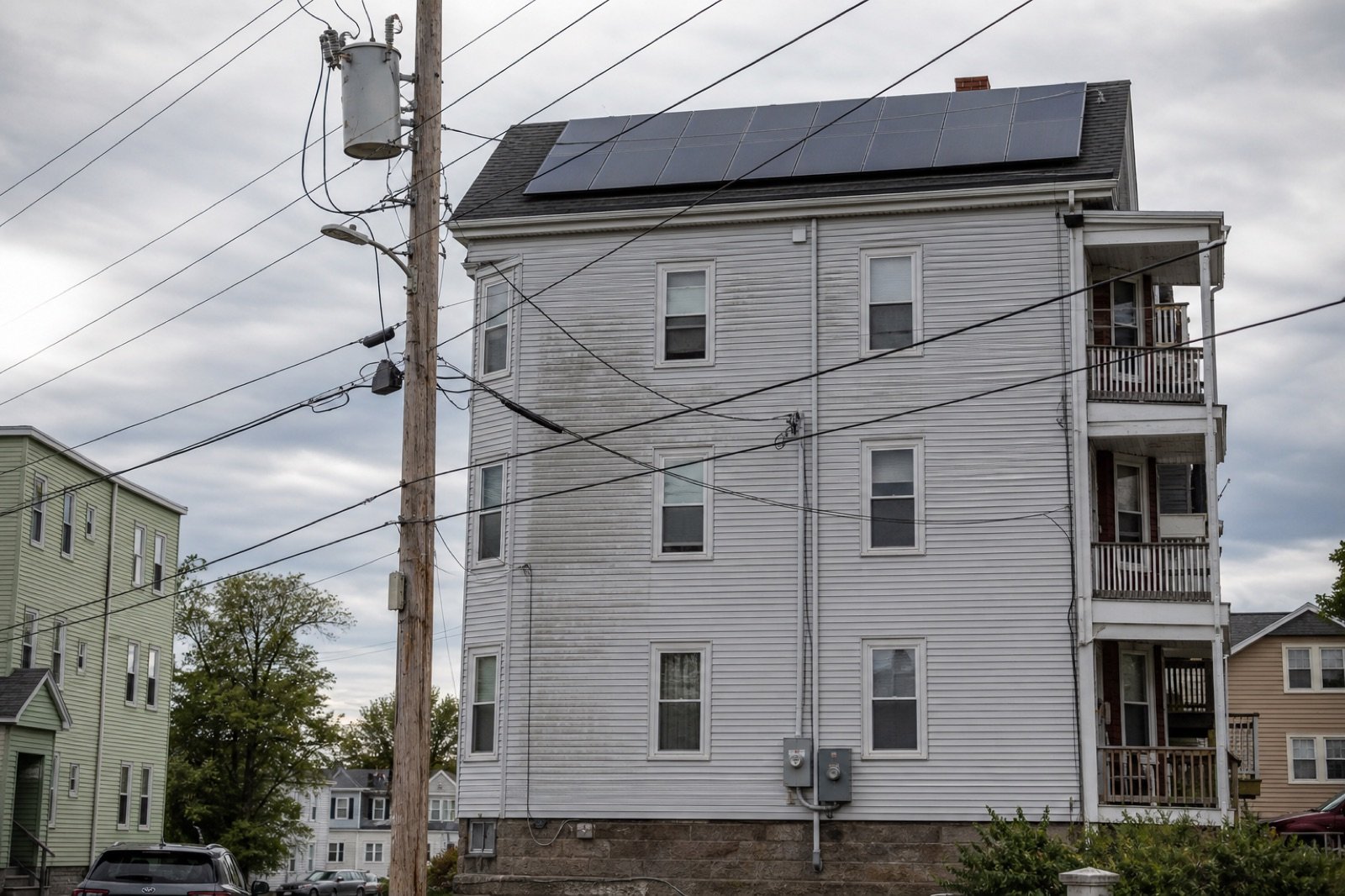
Massachusetts installers have spent years warning homeowners that a Simplified interconnection application can still blow up at the transformer. One house on a shared secondary pays for the upgrade. The next three ride the new can for free. In March the Interconnection Implementation Review Group voted to replace that lottery with a Common System Modification Fee. The electric companies filed the joint proposal. The Department of Public Utilities docketed it as D.P.U. 26-57.
The April 21 notice is the document you can still hand a salesperson. If the Department implements the filing as written, every Simplified Process applicant pays a non-refundable $225 CSM Fee. That fee is supposed to cover distribution work and equipment the utility has to do so a small inverter system can interconnect, up to a company-specific benefit threshold. For Eversource and National Grid the threshold in the notice is $10,000 per eligible Simplified application. For Unitil it is $1,450.
In August the Department acted on that docket. The fee is designed to take effect this fall, not the day after the vote. Until a stamped tariff lands in the file room, treat 26-57 as a live change to the interconnection application, not as a closed chapter.
What the April filing actually says
The National Grid copy of the D.P.U. 26-57 notice is the cleanest public version of the joint petition. NSTAR Electric (Eversource), Massachusetts Electric and Nantucket Electric (National Grid), and Fitchburg Gas and Electric (Unitil) asked the Department to revise the Model Standards for Interconnection of Distributed Generation so a CSM Fee sits inside the Simplified Process. The notice says the Interconnection Fees Subgroup built the proposal, and that the IIRG voted unanimously to support it on March 26, 2026.
Read the scope before you rewrite a proposal template. The fee as filed applies to Simplified Process applicants. It is not a blanket $225 for every Expedited or Standard job. It is not a substitute for a Capital Investment Project under the provisional system planning tariff. If your 150 kW roof fails Simplified screens, you are still in the study world your Massachusetts interconnection application checklist already describes.
The notice is also explicit about what the $225 is buying. It is meant to reduce the chance that one Simplified customer eats a transformer or secondary upgrade that several neighbors will use. The benefit threshold is a cap on how much of that work the CSM Fee covers on a given application. Work above the threshold is still a project-specific conversation with the utility. Do not tell a homeowner that $225 buys any upgrade the feeder might need.
Why PMs should care before the tariff is stamped
Most Simplified jobs never see a transformer invoice. The ones that do tend to see it after the town permit is in, the crew is scheduled, and the loan docs are signed. That is the resell problem. Sales sold a 8.4 kW system on a 200 A service. Interconnection comes back and the secondary cannot take the export. Someone has to explain a four-figure change order or a downsized array.
A posted CSM Fee changes that conversation if, and only if, the job stays on Simplified and the upgrade stays under the threshold. The interconnection application still has to be complete. The one-line still has to match the cut sheets. The account number still has to match the bill. A $225 line item does not cure an incomplete package, and it does not start the tariff clock by itself.
Permission to operate, which the industry shortens to PTO (sometimes you will hear PPO or permit to operate; same closeout), still waits on the utility’s written authorization. The CSM Fee sits earlier, at application and construction. Do not energize because the fee posted.
What to change in the packet this week
- Add a CSM Fee line to Simplified proposal templates for Eversource, National Grid, and Unitil Massachusetts, with a note that the stamped tariff controls the date and the amount.
- Keep transformer-upgrade contingency language for jobs that may leave Simplified or exceed the benefit threshold.
- Freeze inverter and storage SKUs before you hit submit. A last-minute battery can change export and process track.
- Pull the hosting capacity map and the latest monthly interconnection report before you promise a four-week PTO.
- If a job already has a transformer invoice in the portal, do not assume 26-57 refunds it. Ask the DG desk and keep the paper.
Municipal light plants are outside this docket. If the bill says a town department of public utilities, the Model DG tariff does not apply. File the MLP’s form, not Gridforce, and do not quote a $225 CSM Fee on those jobs.
Permit design and the interconnection application
The building permit and the interconnection application remain two clocks. Worcester, Boston, and a Berkshire town hall do not collect the CSM Fee. They still want a site plan, a one-line, structural notes, and cut sheets. See the 2026 Massachusetts permit guide for the AHJ set. Run permit design in parallel with the utility package, not after PTO.
On the utility side, the one-line has to show the existing service, the revenue meter, any production meter, the disconnect, and the proposed interconnection point. Eversource’s Simplified seminars have been clear that a Massachusetts PE stamp is not required on that sketch for small inverter jobs, but the sketch has to be legible and specific. “MIN 60A” for a disconnect is the kind of note that puts a case on hold. If you need a Massachusetts PE in responsible charge on the structural or electrical set, that is a drawing issue, not a 26-57 issue. Use PE stamping when the AHJ or the utility actually asks for it.
Closeout does not change. Inspection card, certificate of completion, as-builts if the array moved, meter work, then the interconnect email. That email is PTO. If field conditions changed the layout, upload as-built drawings before you ask why the case is sitting.
What Athol is doing with live MA jobs
We are tagging Simplified Massachusetts interconnection applications with a 26-57 watch. When the stamped tariff posts, we will match the fee and the effective date to the portal, not to a blog date. Until then, proposal language stays conditional and the engineering model stays frozen to the SKUs on the application.
If you want the same model on the town set and the utility set, that is interconnection work against the Massachusetts design package, not a second guess at the transformer. For city-specific AHJ notes start with Boston or Worcester.
More installer notes live on the blog. Sources: Mass.gov interconnection filings and tariffs (D.P.U. 26-57), D.P.U. 26-57 notice of filing.